
Money Talks
“Price is the purchasing power of any good or service expressed in money.” Mark Lazar
One of the most seemingly simple yet completely misunderstood concepts in the world today is that of money. We all use it but most of us have never given more than a passing thought as to what it actually is. Is money wealth? Is paper money a better medium of exchange than a gold/silver standard? Is cryptocurrency money? Why do prices increase over time? This commentary will endeavor to address each of those questions.
Prior to the concept of money, primitive societies relied on the barter system—the direct exchange of goods or services—which was fraught with challenges and inefficiencies. The cobbler’s wares were unequal in value to that of the candlemaker. The blacksmith produced durable goods, whereas the baker’s bread and butcher’s tenderloin were valuable for but a brief period of time. A watch or clock maker needed to acquire the parts and materials first in order to manufacture a timepiece. And the lamp oil merchant may not want or need any more chickens. A standardized and accepted medium of exchange addressed these and other issues associated with direct exchange.
As society evolved, so too did the way we acquire and dispose of things. Over the millennia various forms of money have been tried, including but not limited to cowrie shells, rai stones, wampum, precious metals, and fiat currency. But as society eventually learned, a proper medium of exchange should have the following five characteristics:
- A store of value, meaning it maintains its value over time, with little or no holding costs.
- Fungibility, meaning it’s exchangeable and interchangeable.
- Scarcity, meaning it requires work or effort to acquire and/or limited/controlled supply
- Highly liquid, meaning substantial market demand.
- Universal acceptance. Legal tender laws identify the US dollar as both the official currency and the standard for commerce, trade, and finance.
Money isn’t wealth. Rather, it’s a medium of exchange. During our working years, we trade hours for dollars, then exchange those dollars for stuff. When wages increase faster than price levels, purchasing power and living standards increase. Conversely, the opposite occurs when prices rise faster than earnings.
How do we know money isn’t wealth? If you were stranded on a desert island, would you rather have a million dollars, or a dozen chickens, a diverse garden, and a waterproof hut? Money only has value because its fungible, meaning you can freely exchange it for commodities or services.
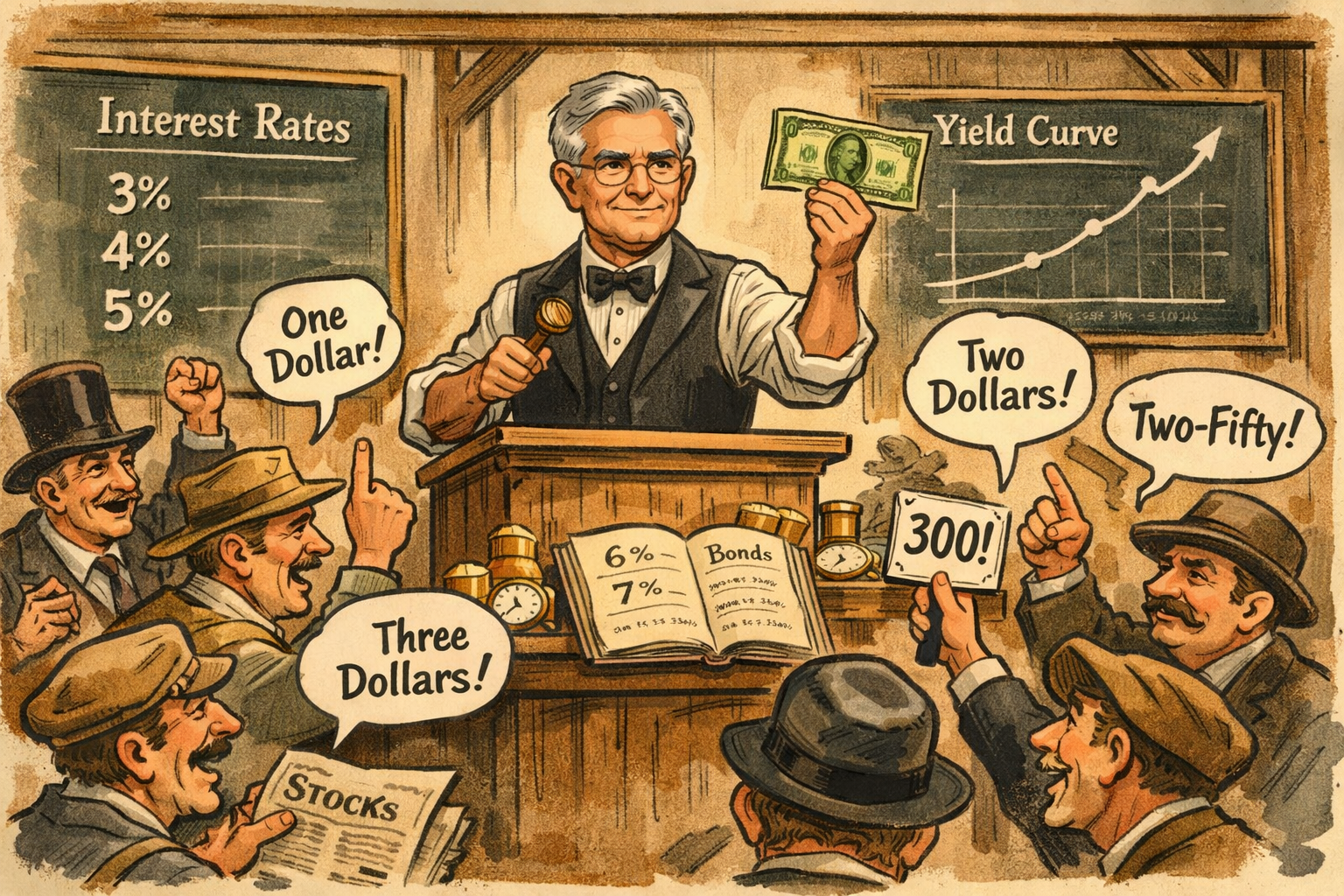
Simply put, money is a measuring stick, and price is the purchasing power of any good or service expressed in money. In a free market, the price of everything; milk, bread, housing, wages, etc., is the function of supply and demand, and money is how we assign value; how many dollars are we willing to pay for a cup of coffee, iPhone, or flat screen TV. To that point, the market assigns greater value to a Rolex than a Timex. A Ferrari than a Ford. And to an engineer than a bus driver. This stands in stark contrast to the Marxist maxim from each according to his ability, to each according to his needs, where the iron fist of the state sets price levels as opposed to the invisible hand of the free market.
The Founders were fiercely skeptical of a monetary system based on paper money. They understood that while a precious metals-based system was imperfect, a fiat currency scheme would present too great a temptation to politicians who could essentially bribe the public with the public’s money. Hence, the US was on a gold, silver, or bimetal standard between 1792-1968, after which the transition to fiat currency was complete. Which begs the question, what backs the US dollar? The answer; faith.
There are two basic requirements for a fiat currency to be a sound medium of exchange; monetary and fiscal responsibility. Let’s see how the two have changed over the past 40-years and use GDP as a basis for comparison. In 1982 the money supply (M2) equaled 24% of real GDP, however by 2022 it had increased to 100%, or grown four times faster than the real economy during that period. Similarly, debt to nominal GDP in 1982 was 32%, but exceeded 119% (total public debt outstanding) by the end of 2022. The pace of both debt and monetary expansion are clearly unsustainable.
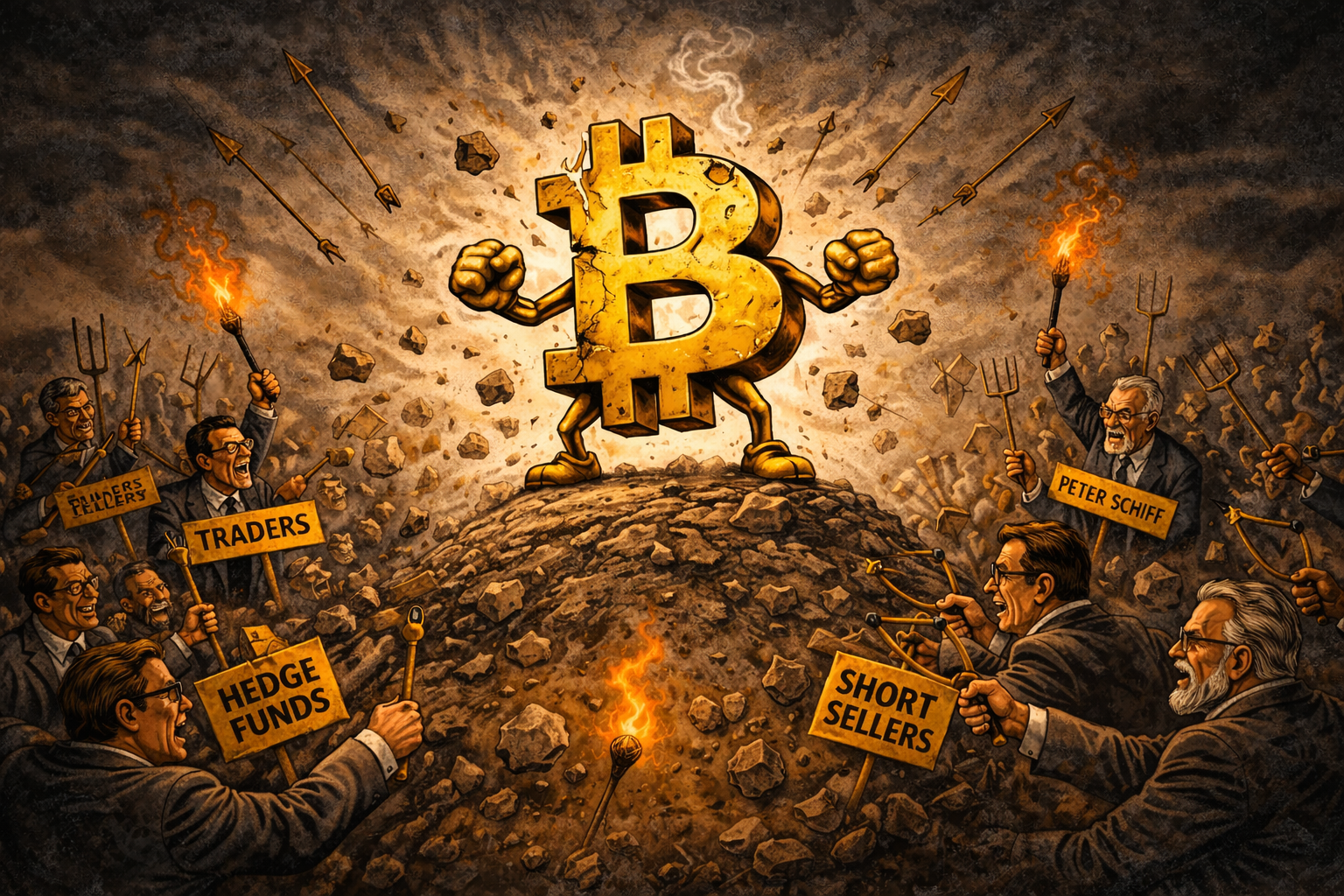
But Uncle Sam doesn’t have a monopoly on profligate governance. Virtually every developed nation is currently running large deficits and printing money to pay the bills. Which might explain why cryptocurrency has done so well as of late. Since the beginning of the year, bitcoin, for example, is up nearly 400%.
Could a cryptocurrency eventually become the preferred medium of exchange? Possibly. Bitcoin, for example, with its finite supply meets most of the requisite factors except for universal acceptance and the extreme price swings, which preclude it from being a predictable store of value. If and when those last two variables are resolved, a cryptocurrency with a finite supply would eliminate the concern of governments and/or central bankers inflating the money supply.
Prior to horribly flawed Keynesian theory it was universally understood by policymakers and academics alike that inflation referred to the central bank increasing the money supply faster than the growth in production/output. It was a noun, not a verb. In stark contrast, inflation has become synonymous with a rise in general prices, and its connection to monetary policy is overlooked, if not overtly refuted by policymakers.
Why do prices rise over time? As Milton Friedman correctly observed, inflation is always and everywhere a monetary phenomenon, meaning at the end of the day the central bank is the culprit. To that point, the best, right, perfect rate of inflation/general increase in prices is zero. A 2% inflation target is akin to a ship designed and manufactured with a slow and steady leak; absent continual cost and effort to bail out the water, the boat will eventually sink.
Mark Lazar, MBA
CERTIFIED FINANCIAL PLANNER™
wasatchfinance.com