
Weekly Blog #17
Nostalgia is memory after a few drinks.
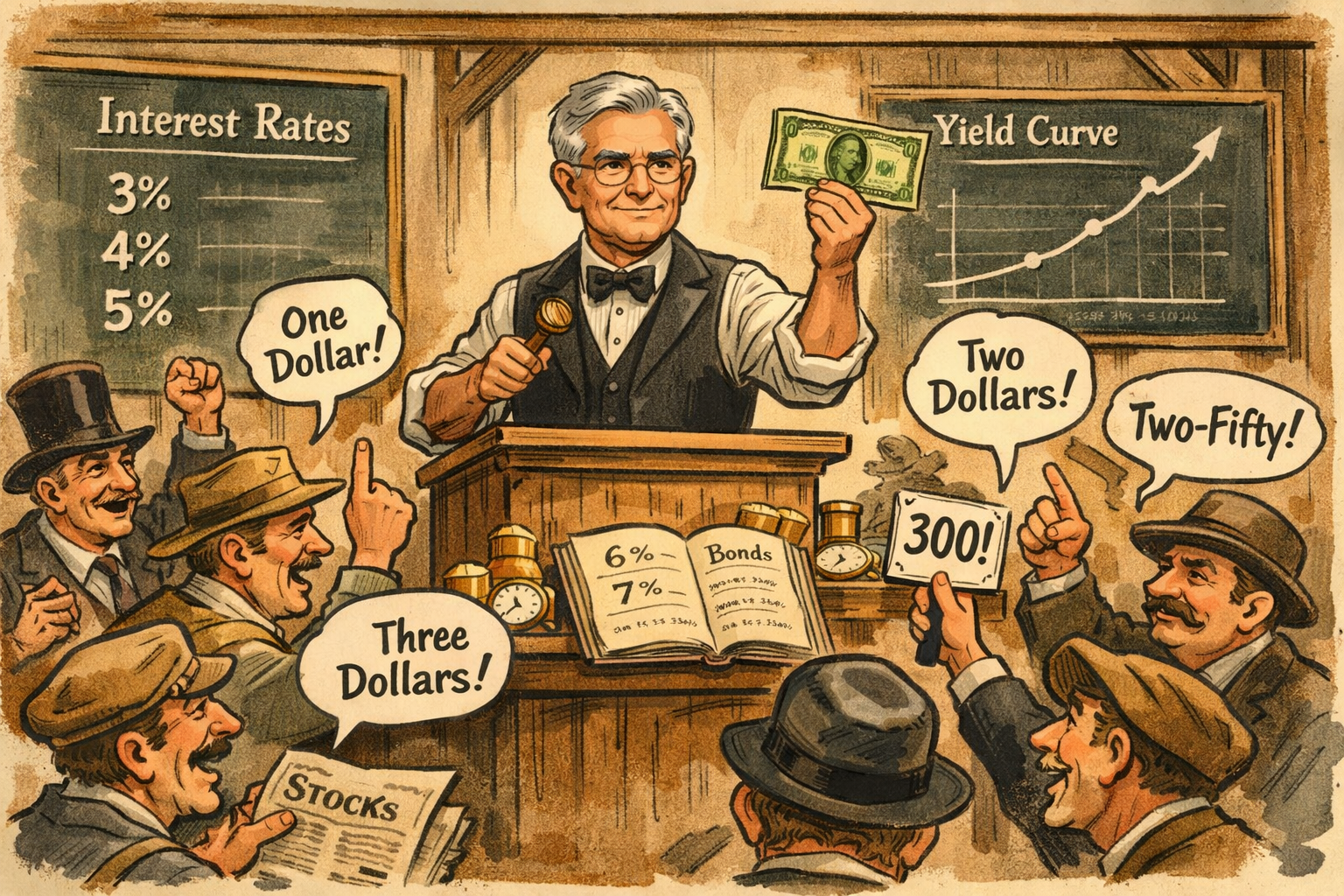
Few topics inspire more nostalgia—and delusion—than mortgage rates. Every week, brokers, buyers, and investors ask the same question: “When are we going back to 3%?” The honest answer? We’re not. And that’s a good thing.
The 3% mortgage rate wasn’t born of the COVID pandemic—it was the legacy of the Great Financial Crisis. In 2008, then-Federal Reserve Chair Ben Bernanke unleashed the most ambitious monetary experiment in history. Through successive rounds of quantitative easing (QE), the Fed created trillions of dollars out of thin air to buy Treasuries and mortgage-backed securities, driving yields to record lows and distorting nearly every facet of the capital markets (security prices).
For more than a decade, interest rates were artificially suppressed to levels unseen in modern times, conditioning an entire generation of borrowers, investors, and policymakers to believe that 3% was somehow normal. When the pandemic arrived in 2020, the Fed merely doubled down—QE on steroids, zero-interest policy, and a torrent of fiscal stimulus layered on top of an already-inflated system. COVID wasn’t the cause of cheap money; it was the coup de grâce to monetary sanity.
To understand why 3% isn’t coming back, it helps to distinguish between nominal rates and real rates. The nominal rate is what borrowers see on paper. The real rate is the nominal rate minus inflation. During the post-GFC years, inflation averaged near 2% while the Fed Funds rate hovered close to zero, meaning real rates were effectively negative. Savers were punished, risk was rewarded, asset prices soared, and leverage became a lifestyle. That environment was unsustainable—and it was never meant to be permanent.
Fast-forward to today. At 2.9%, inflation remains 45% above the Fed’s 2% target, federal debt exceeds $38 trillion, and annual deficits are measured in trillions. The Fed can’t sustainably return rates to zero without reigniting inflation or undermining the dollar’s credibility. Nor can it resume quantitative easing at the scale of 2010–2021 without stoking another asset bubble. The structural forces that made 3% mortgages possible—a deflationary world, central-bank money printing, and relentless bond-buying—no longer exist.
That doesn’t mean today’s 6–7% rates are “high.” They’re not. They’re normal if not historically low. Over the past half-century, the average 30-year fixed mortgage rate has been around 7.5%. The 1980s saw double digits; the early 2000s hovered near 6%. What we’re living through now isn’t a crisis—it’s a reversion to the mean. The problem isn’t that rates are too high; it’s that expectations are distorted.
The industry’s obsession with “waiting for rates to drop” is self-defeating. Buyers sitting on the sidelines aren’t avoiding high prices—they’re compounding lost opportunity. Home values continue to rise in most markets, inventory remains tight, and inflation quietly erodes purchasing power. The longer someone waits for 3%, the more expensive that 3% becomes—if it ever returns at all.
Real estate professionals should remember that demand isn’t killed by higher rates—it’s repriced. Investors adapt. Markets adjust. Capital always seeks yield. As rates normalize, cash-flow math changes, cap rates widen, and creativity returns to the marketplace. We’ve entered an environment that rewards skill over speculation. The era of free money is over—and that’s a healthy thing.
For brokers and loan officers, this shift is an opportunity to reframe the conversation. The discussion shouldn’t focus on rates, but on strategy. Rate shoppers are chasing ghosts, but smart borrowers focus on fundamentals, value, leverage, liquidity, and long-term positioning. A 6% mortgage on an appreciating asset beats waiting indefinitely for a 3% fantasy that never returns.
Even if the Fed eventually cuts rates, it won’t be by much. The so-called neutral rate—the level consistent with stable inflation and full employment—is now estimated near 2.5% in real terms. Add a 2% inflation target, and the math points to a nominal Fed Funds rate around 4.5%. That implies mortgage rates in the 6% range are consistent with a balanced, growing economy.
There’s also a generational hangover to consider. Millions of homeowners refinanced into ultra-low mortgages during the QE years. Those loans aren’t just cheap, they’re golden handcuffs. Homeowners with 3% debt are effectively trapped; they can’t sell without doubling their mortgage cost. That keeps inventory artificially tight, pushing prices higher and making affordability worse. Even if rates fell tomorrow, affordability wouldn’t magically improve—prices would simply spike again.
So no, 3% isn’t coming back. But that’s not a tragedy—it’s a return to reality. Extreme/extraordinary stimulus (monetary and or fiscal) is symptomatic of an economic malady, whereas stable inflation, sustainable debt, and normalized rates are the hallmarks of a healthy economy. The Fed doesn’t need to rescue the market; it just needs to stop rescuing it. When the training wheels come off, the professionals who understand how to navigate normal—not artificial—conditions will lead the way.
In hindsight, the 3% era will look like what it truly was: an extraordinary moment in history born from crisis and prolonged by misguided monetary policy. It’s over, and that’s fine. What matters now isn’t the rate you missed—but the opportunities ahead.
Wealth isn’t built waiting for perfect conditions, but by adapting to real ones.
Mark Lazar, MBA
CERTIFIED FINANCIAL PLANNER™