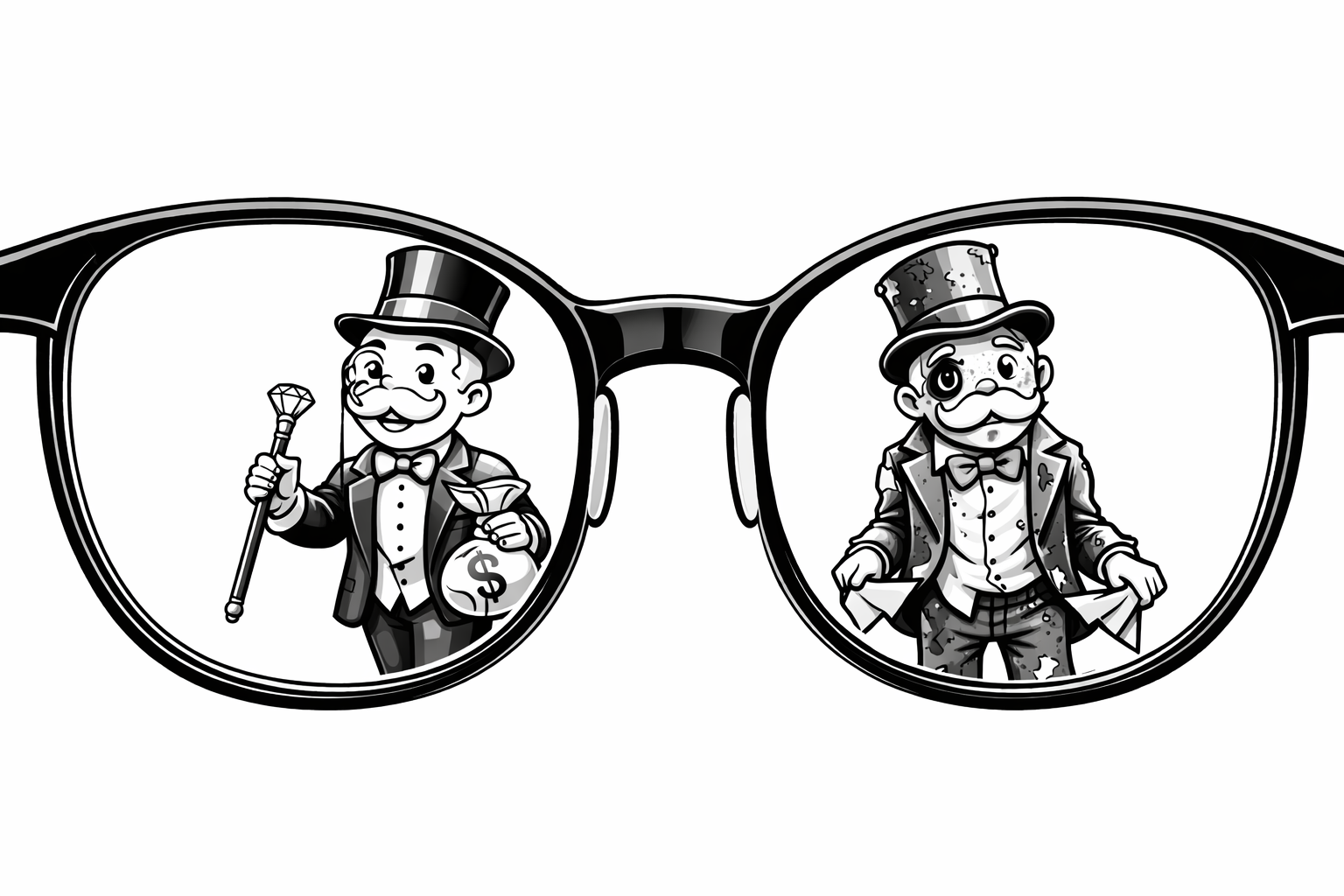

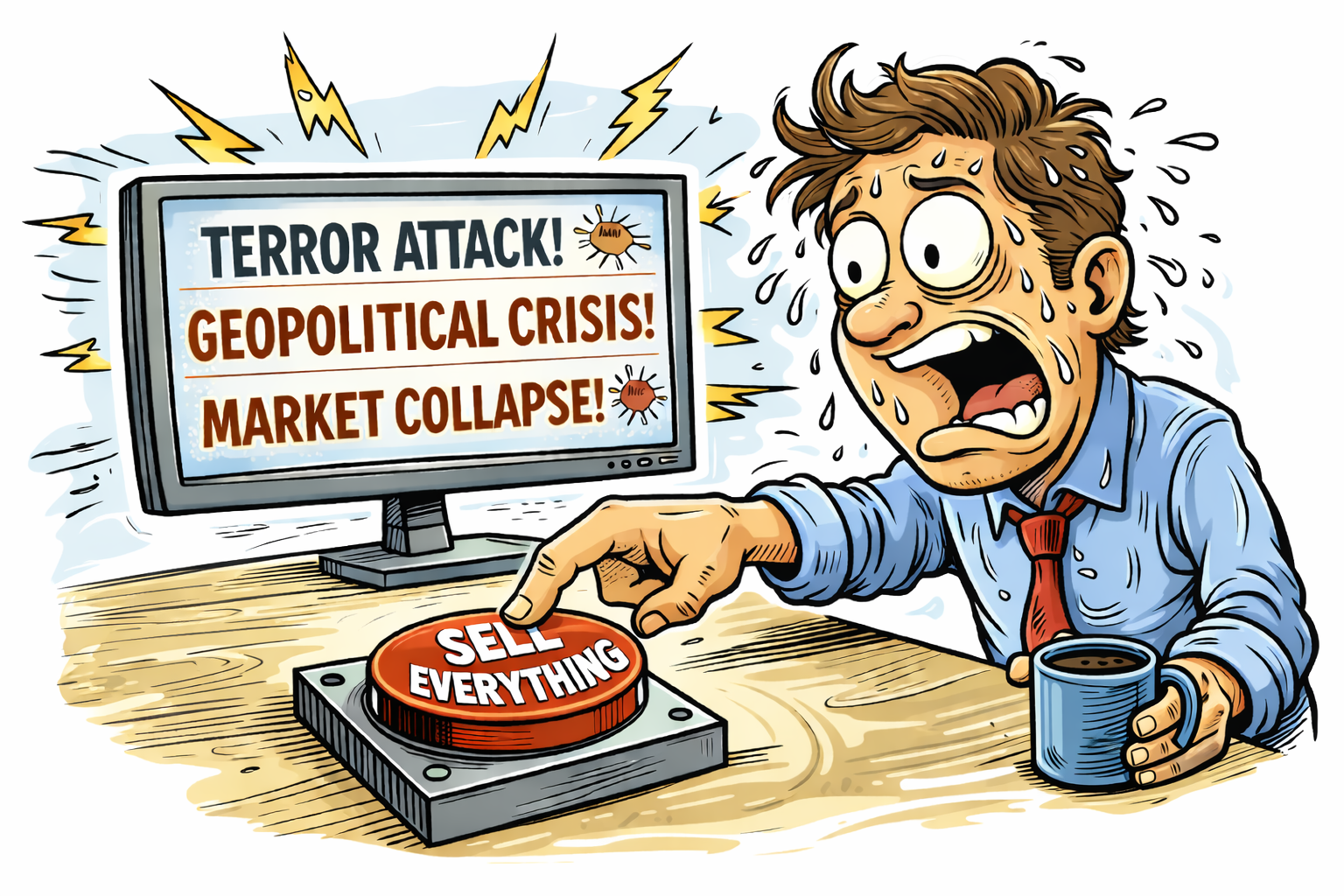
“Profits are compensation for pain and suffering. First comes pain, then comes money.” André Kostolany.
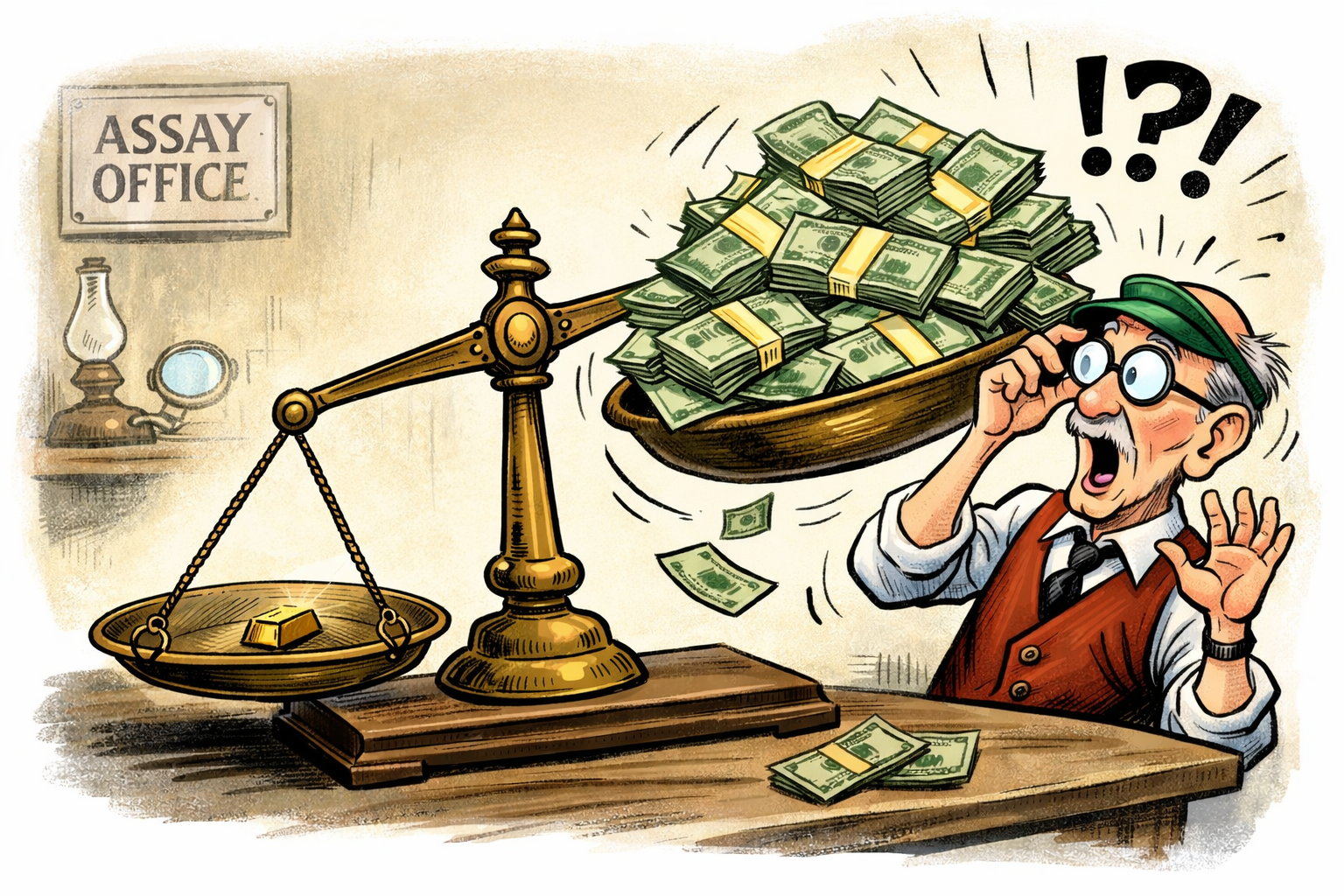
Within minutes of the U.S. and Israel’s strike on Iran, oil jumps, gold rallies, the VIX (volatility index) spikes, Treasury yields fall, the dollar strengthens, and stock futures turn red. The classic risk-off trade.
When uncertainty rises, investors seek safety. Capital rotates out of equities and into Treasuries. Gold catches a bid. Oil moves on supply fears. Volatility climbs. It’s a pattern we’ve seen dozens of times, yet each episode feels new, urgent, and potentially catastrophic.
But markets don’t move on fear alone. They move on changing expectations. A “risk-off” move isn’t a moral judgment. It’s a repricing of uncertainty. When geopolitical tensions rise, investors demand a higher return to own risky assets. Prices adjust accordingly. That adjustment feels like loss. It feels like instability. But it is simply the market recalibrating risk.
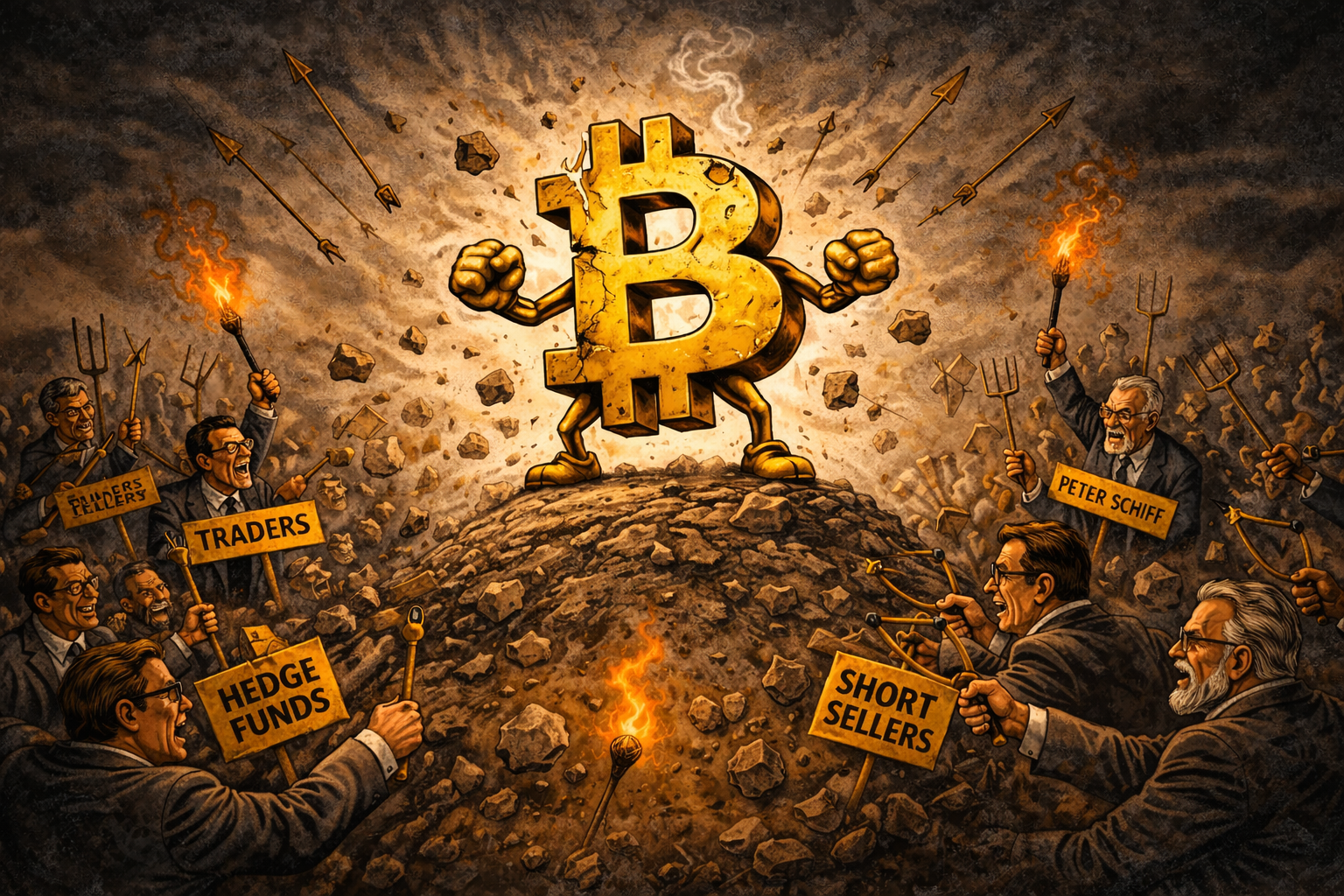
The deeper issue isn’t what oil or gold are doing. It’s how investors respond emotionally to volatility. Behavioral finance has shown repeatedly that humans are wired to avoid pain. Loss aversion is powerful. A portfolio decline triggers a physiological response. We feel urgency. We feel compelled to act. And when others are acting—selling, hedging, scrambling—herd behavior takes over. It feels safer to run with the crowd than to stand still. But volatility and permanent loss are not the same thing.
Price is what someone will pay in the moment. Value is what an asset produces over time. The two often diverge in the short run. When a military strike hits the headlines, the first market move is rarely the result of a sober reassessment of long-term earnings power. It is emotional repricing. Risk premiums expand. Liquidity becomes attractive. Safety trades rally. Is this time different?
That question surfaces during every geopolitical crisis, every recession scare, every banking stress event. And while the circumstances are always unique, the underlying structure of markets is not.
There will always be reasons to be cautious. There will always be headlines suggesting instability. The world has never offered a period of complete certainty. If one waits for geopolitical calm before investing, one waits forever.
Investing is, by definition, the assumption of risk in pursuit of return. The reward exists precisely because the risk does.
Kostolany captured the essence of it. Profits are compensation for pain. First comes discomfort. Then, potentially, reward. Remove the discomfort and you often remove the compensation.
This is where the temptation to time the market becomes strongest. When markets fall sharply, it feels rational to step aside, wait for clarity, and re-enter when things “settle down.” The flaw in that logic is simple: clarity rarely announces itself in advance. By the time the environment feels stable, prices have already adjusted.
Even if events deteriorate further, a second problem arises: when do you buy back in (risk-on)? That decision requires near-perfect timing. And while countless voices claim predictive insight, history has shown that consistent market timing is beyond the reach of mere mortals—professional or otherwise. What has worked, however, is discipline.
A well-constructed strategy, combined with adequate liquidity and available credit, allows investors to endure volatility without becoming forced sellers. Forced selling—selling because circumstances demand it, not because analysis supports it—is what turns temporary price declines into permanent capital impairment.
Periods of stress often create strange crosscurrents. Oil can rise while Treasury yields fall. Gold can rally alongside the dollar. Mortgage rates may decline if Treasury yields move lower, even as equity markets struggle. Markets are not simple narratives. They are interconnected systems responding to shifting incentives and changing risk perceptions.
In moments like this, the question is not whether risk exists. It clearly does. The question is whether one’s portfolio, balance sheet, and psyche are structured to withstand it.
Long-term wealth has historically been built not by avoiding every downturn, but by owning productive assets through cycles. Businesses continue to generate earnings. Real estate continues to produce cash flow. Innovation continues. Economies adapt. The path is never smooth, but the trajectory over decades has favored those who remained invested rather than those who repeatedly fled to the sidelines.
None of this suggests recklessness. Risk management matters. Diversification matters. Liquidity matters. But panic rarely adds value. Nor does euphoria during speculative frenzies. Markets oscillate between fear and greed. Successful investors resist both extremes.
A “risk-off” day feels dramatic. Prices move quickly. News cycles accelerate. But in the context of a multi-decade investment horizon, these episodes become small dents in a much larger compounding arc.
The uncomfortable truth is that volatility is not a bug in the system. It is part of the system. It is the mechanism through which risk is priced and repriced.
There will always be reasons to sell. There will always be convincing arguments that “this time is different.” But the long arc of markets has rewarded patience, discipline, and the willingness to endure temporary discomfort. First comes pain. Then, for those who stay the course, comes money.
As the old investing adage goes, it’s not about timing the market; it’s about time in the market. And as Jack Bogle wisely advised, “Don’t do something. Just stand there.”
Mark Lazar, MBA
CERTIFIED FINANCIAL PLANNER™