
Weekly Blog #23
“Gold is money. Everything else is credit.” J.P. Morgan
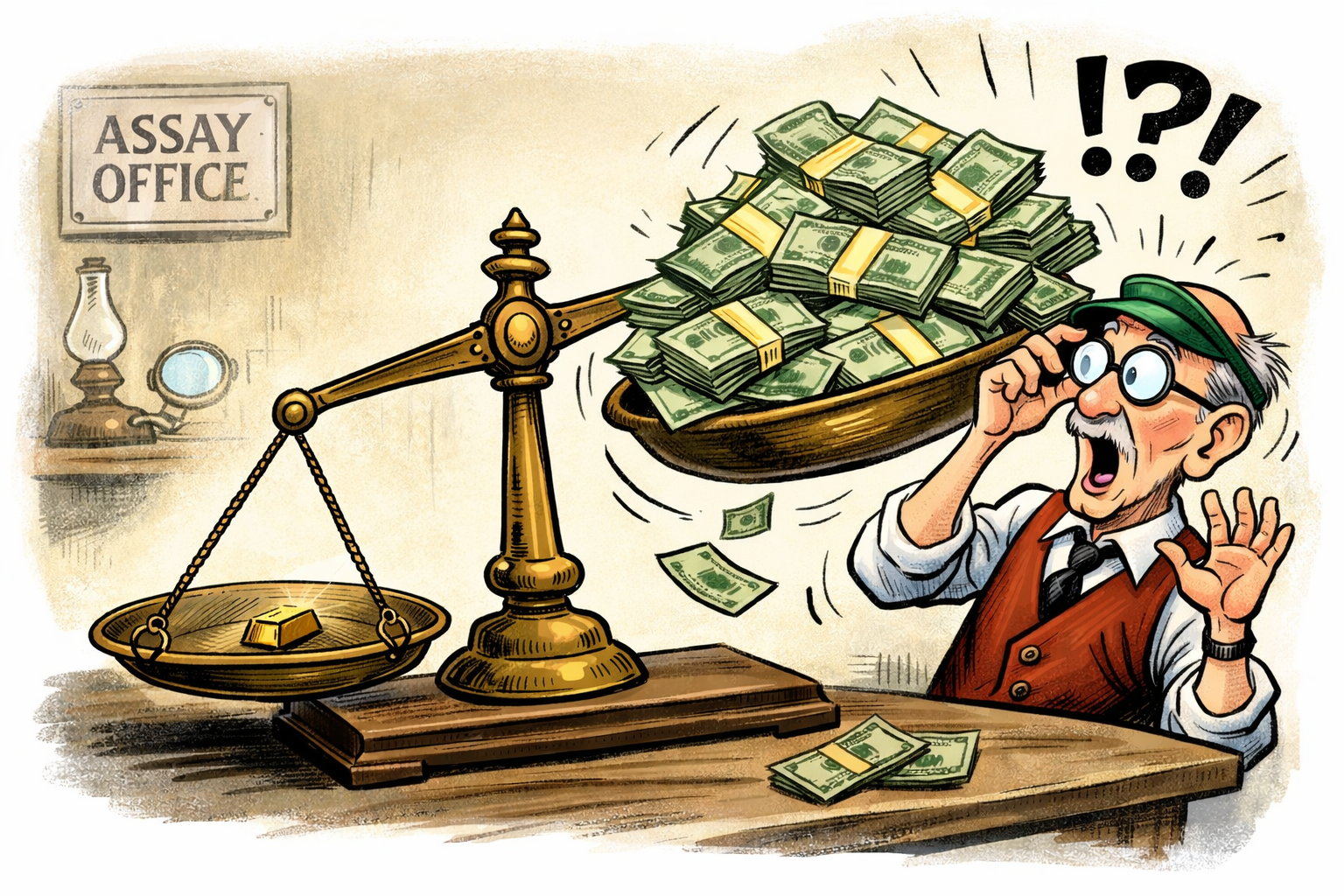
Gold and silver are on a tear. Gold has surged to new highs, silver is finally waking up from a long nap, and—almost on cue—the U.S. dollar is sliding. None of this is random, and none of it should be surprising. Precious metals are not reacting to headlines; they are responding to math, policy, and credibility, or lack thereof
Markets are forward-looking. Gold doesn’t wait for inflation to show up in CPI prints, and it doesn’t care about political spin. It prices trust—or the lack of it—in monetary policy. When gold and silver move sharply higher while the dollar weakens, they are sending a clear message. The message is not subtle.
Let’s start with the dollar. The U.S. Dollar Index (DXY) has been drifting lower—down >10% over the past year—as expectations for future Fed interest-rate cuts increase and real yields compress. On paper, inflation has cooled from its 2022 peak. In practice, prices remain materially higher, deficits are exploding, and debt issuance is accelerating. Markets understand something policymakers would prefer to ignore: the U.S. cannot afford meaningfully higher real rates for long without blowing a hole through the federal balance sheet.
With federal debt now exceeding $38 trillion and interest expense approaching $1 trillion annually, the math becomes unforgiving. Every percentage point increase in borrowing costs compounds the deficit. The Treasury must issue more debt simply to service existing debt—a classic feedback loop. When investors realize that fiscal dominance has replaced monetary independence, the currency takes the hit.
A weaker dollar is not a policy accident; it’s a feature, not a bug. Gold thrives in that environment. It always has. Gold is not an inflation hedge in the sense people often expect. It is a hedge against monetary disorder, negative real rates, and declining confidence in fiat systems. When real yields fall—either because rates are cut or inflation remains sticky—gold becomes more attractive relative to paper assets. Today, we have both forces at work.
The Federal Reserve insists it is “data dependent,” but the data is boxed in by political and fiscal realities. Inflation may moderate, but it is unlikely to return sustainably to 2% without a recession or financial accident. Meanwhile, cutting rates too aggressively risks reigniting inflation and further undermining the dollar. The Fed is trapped between credibility and solvency—and markets know it.
Silver, often called “gold’s less attractive sister,” adds another layer. Unlike gold, silver straddles the line between monetary metal and industrial commodity. It benefits from inflation fears and currency debasement, but also from rising demand tied to electrification, solar, and advanced manufacturing. When silver starts outperforming gold, it often signals that inflation expectations are becoming embedded rather than episodic.
This matters for interest rates. Bond markets are increasingly skeptical that the current rate environment is sustainable without consequence. While nominal rates may come down, real rates are likely to remain compressed. That’s not bullish for savers or long-duration bonds, but it is constructive for hard assets—real estate, commodities, and precious metals.
The surge in gold and silver is not predicting hyperinflation tomorrow—it’s signaling something more subtle and more dangerous: a long period of financial repression. In that world, policymakers hold rates below the true inflation rate to manage debt burdens, quietly transferring wealth from savers to borrowers. It’s inflation by attrition rather than explosion.
This is why gold doesn’t collapse when inflation data “improves.” Markets understand that official inflation metrics understate lived reality and that future policy responses are constrained. Once credibility erodes, it is difficult to restore. Central banks around the world, particularly in emerging markets, are buying gold at the fastest pace in decades. They are diversifying away from dollars not because they hate the U.S., but because concentration risk is real.
The implications are straightforward. First, inflation is not over. It may ebb and flow, but the structural drivers—debt, demographics, deglobalization, and deficits—are inflationary. Second, interest rates are unlikely to return to the zero-bound fantasy of the 2010s without severe consequences—think severe recession or depression. If they do, it will come at the expense of the dollar. Third, asset allocation matters more than ever.
Cash is no longer king when purchasing power erodes. Bonds are not the safe haven they once were when real yields are negative. Equity valuations remain sensitive to rate volatility. Hard assets—those that cannot be printed—deserve renewed respect.
This does not mean investors should “back up the truck” on gold and silver or expect straight-line gains. Precious metals are volatile and cyclical. But dismissing their message would be a mistake. They are not predicting collapse; they are diagnosing a fiscal imbalance.
“All that Glitters” is not about speculation—it’s about signals. When gold and silver rise together while the dollar weakens, they are telling you that confidence in monetary stewardship is fraying. Inflation may not roar, but it will linger. Rates may not spike, but they will be constrained. And policymakers will continue choosing the least painful option in the short term, even if it creates more pain later.
Gold and silver aren’t just shiny, pretty metals; they’re key economic indicators. Ignore them at your own risk.
Mark Lazar, MBA
CERTIFIED FINANCIAL PLANNER™