
“None of us are greedy—it’s only the other fella who’s greedy.” Milton Friedman
Gordon Gekko, the antagonist of the 1987 film Wall Street, infamously declared, “Greed is good.” But what, exactly, is greed? Is it greedy to want to live in a safe neighborhood, send your children to good schools, provide for your elderly parents, build financial security, or donate generously to your favorite charity?
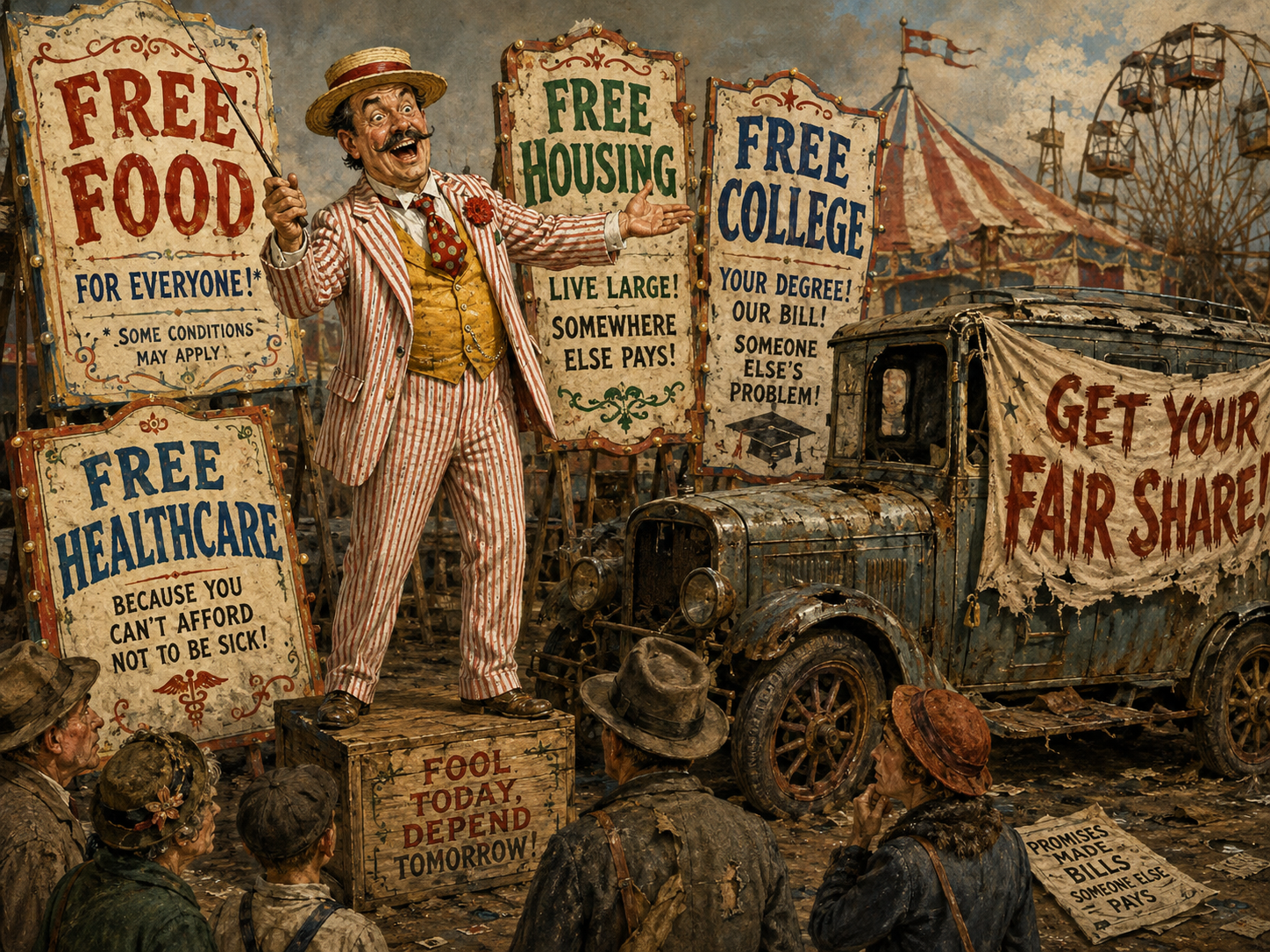
Socialism is rising in popularity, particularly among Millennials and Gen Z, which isn’t difficult to understand when you hear the sales pitch: free healthcare, free childcare, free college, guaranteed housing. But “free” is an adjective, not a funding mechanism. Someone still has to pay for it.
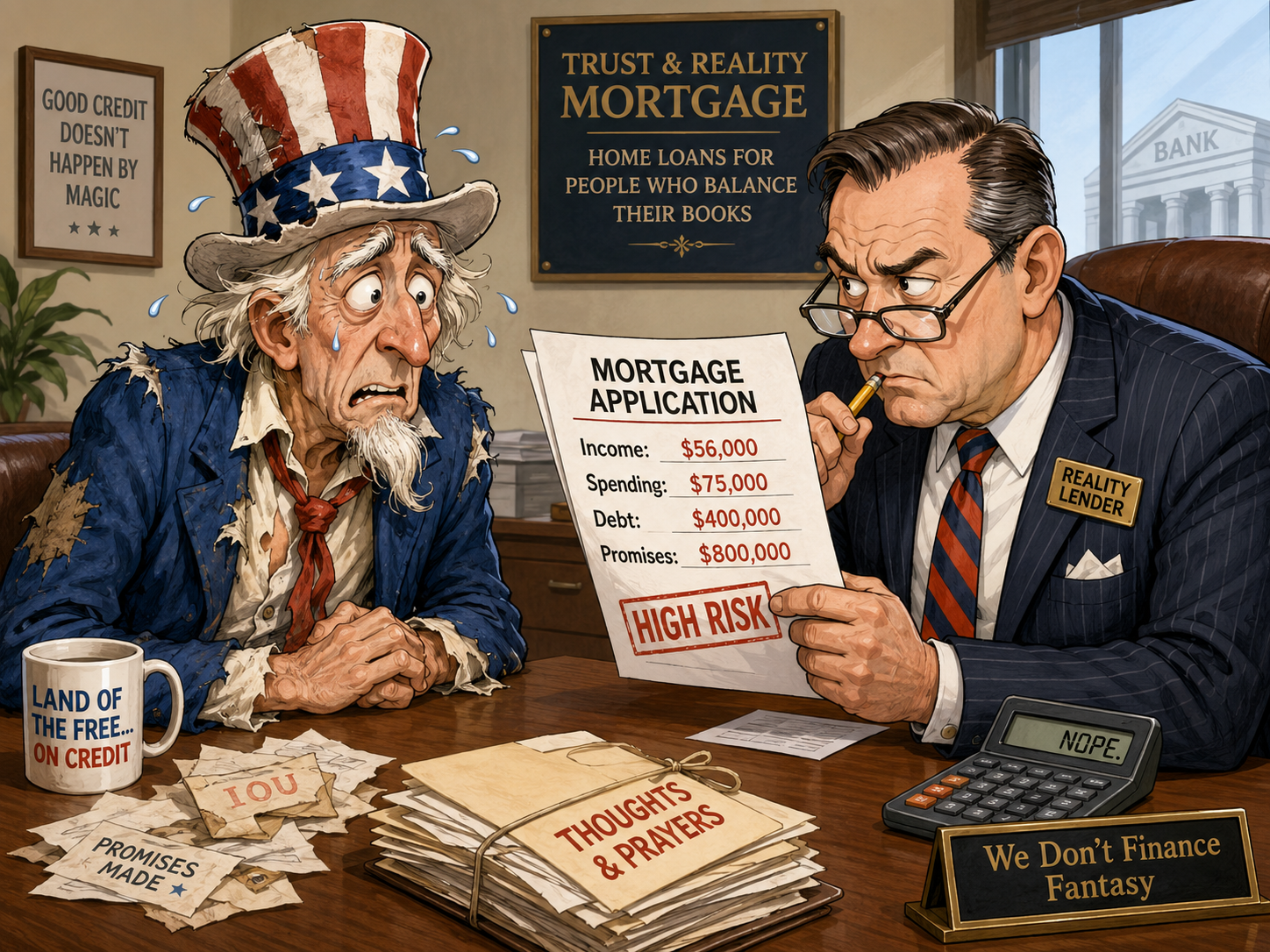
The U.S. economy is roughly $33 trillion. Federal tax receipts are projected around $5.6 trillion while spending approaches $7.4 trillion—nearly a $2 trillion annual deficit. Uncle Sam is approaching $40 trillion in debt, with annual interest expense nearing $1.5 trillion. And that’s before confronting the enormous unfunded promises embedded in Social Security, Medicare and other entitlement programs. So where, exactly, is the money supposed to come from for all this “free” stuff?
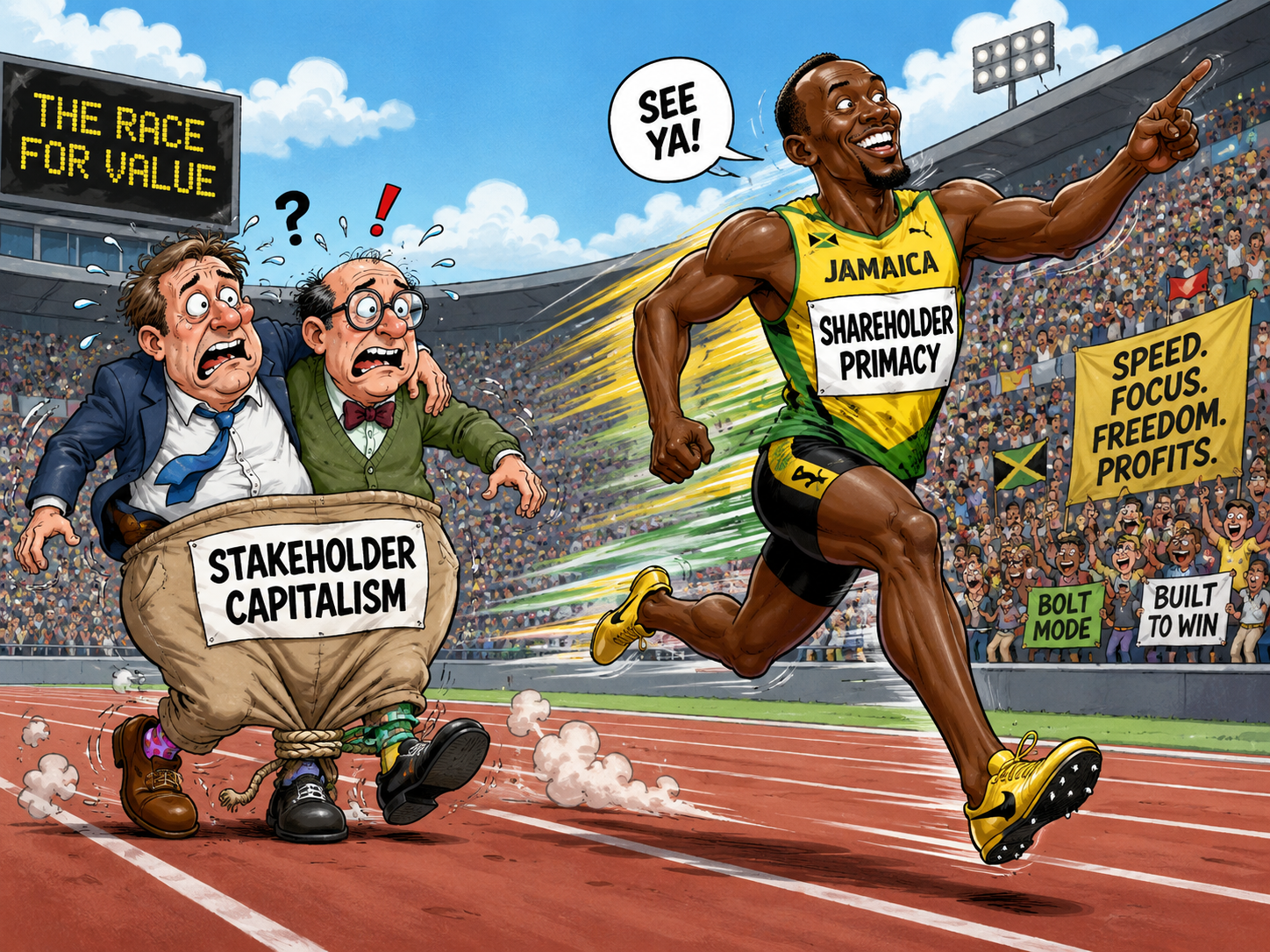
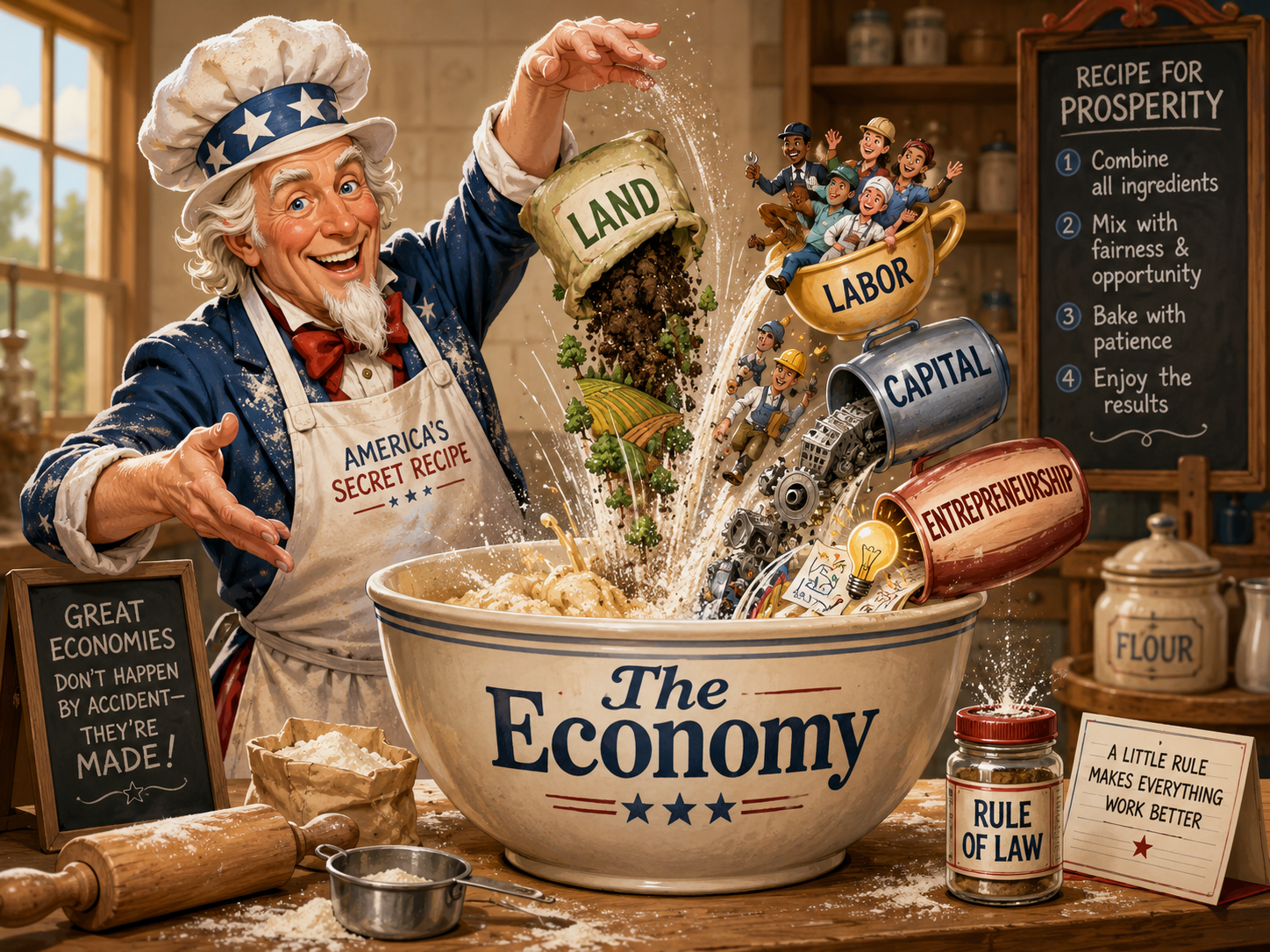
To the socialist mind, capitalism is often synonymous with greed. Yet most of the products, services and innovations that have transformed human life did not arise because a benevolent government bureaucrat decided we should have them. They arose because individuals and businesses saw problems to solve, needs to satisfy—and, yes, opportunities to earn a profit. That profit motive provides something government generally lacks: an objective measure of value.
How do we know whether a government department or agency—Agriculture, Energy, Transportation, Education or the FDA—is producing benefits greater than its costs? It’s extraordinarily difficult to know. In the private sector, the feedback mechanism is brutally clear. Does the company provide something customers voluntarily value enough to purchase? Can it do so efficiently enough to earn a profit?
Capitalism is based on competition and voluntary exchange. In that sense, capitalism is economic freedom. If we believe a product or service is worth the asking price, we voluntarily exchange our dollars for it. If we don’t, we walk away. Businesses that consistently create value survive and prosper. Businesses that fail to do so eventually disappear.
Government, however, operates under a very different discipline. A private company that repeatedly loses money eventually closes its doors. A government agency that fails to achieve its objectives instead receives a larger appropriation the following year.
Consider the U.S. Department of Education, created in 1979 with the stated mission of promoting educational excellence and equal access. Today its annual budget is roughly $90 billion. Yet after nearly half a century of federal involvement, roughly one-third of 12th graders cannot read at a basic level, and nearly half fail basic math proficiency. If the DOE were a private company it would have been shuttered decades ago.
Then there is higher education itself. Over the past forty years, American higher education has become dramatically more expensive without delivering commensurate results. Even after adjusting for inflation, tuition at public universities is roughly three times what it was in the mid-1980s, while colleges and universities now hold nearly $1 trillion in endowments. Meanwhile, Americans owe approximately $1.7 trillion in federal student loans, roughly 9 million borrowers are in default, and about 42% of recent college graduates are working in jobs that do not require a college degree. In a number of arts and liberal-arts disciplines, underemployment exceeds 50%.
The incentives are badly misaligned. Universities collect their tuition up front regardless of whether the degree ultimately produces sufficient economic value. Students—and increasingly taxpayers—bear the consequences when an expensive credential fails to generate the income needed to justify its cost.
None of this means government has no legitimate role in scientific advancement, infrastructure, education or basic research. Government has funded enormously important achievements, from the Manhattan Project and interstate highway system to space exploration and foundational scientific research. But government spending still carries an opportunity cost. Every dollar directed by politicians and bureaucrats is a dollar no longer directed by individuals through voluntary choices in the marketplace. And because government programs are largely insulated from profit-and-loss discipline, measuring what society might have produced with those same resources is nearly impossible. That is the fundamental distinction.
Markets are imperfect because human beings are imperfect. Executives make mistakes. Companies fail. But capitalism contains a built-in corrective mechanism: competition, consumer choice, profits and losses. Socialism replaces those decentralized decisions with political decisions then entrusts enormous economic power to the very same imperfect human beings.
It is easy to understand the allure of socialism, particularly to young people with little knowledge of its historical record. Its promises sound compassionate: fairness, equality, security and dignity for everyone. But good intentions don’t repeal economics. Systems that weaken property rights, suppress price signals, diminish competition and sever the connection between risk and reward invariably reduce the incentives to work, save, invest and innovate.
The danger of socialism isn’t merely that it tends to make societies poorer and less free. The danger is that it sounds virtuous while doing so. And history has repeatedly reminded us that the road to hell is often paved with good intentions.
Mark Lazar, MBA
CERTIFIED FINANCIAL PLANNER™